Static on Purpose: The Hackers Routing Around the Internet You Know
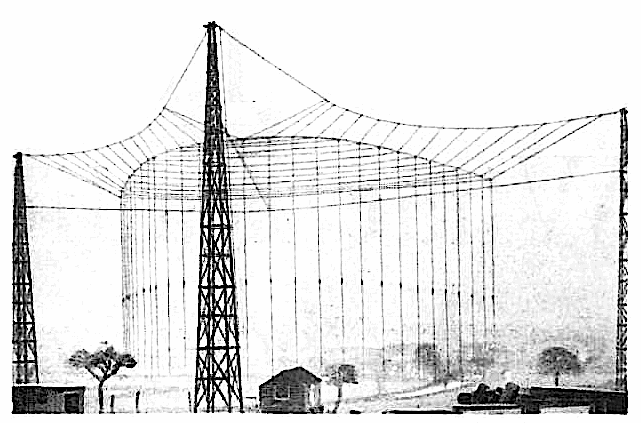
Photo: Frank Parker Stockbridge, Public domain, via Wikimedia Commons
There's a frequency out there that nobody's selling ads on. No algorithm decides what travels across it. No terms of service. No throttling. Just signal, noise, and the people stubborn enough to make something useful out of both.
Shortwave radio culture has always had a fringe reputation — the domain of Cold War spooks, survivalists, and retirees with too much time and too much solder. But something's shifted. A younger, more technically ambitious crowd has moved in, and they're not just listening. They're transmitting data.
Not Your Grandfather's Ham Shack
The amateur radio community in the US has seen a quiet but real influx of people who came up on open-source software, decentralized protocols, and a general distrust of corporate infrastructure. For them, the appeal of shortwave and HF (high frequency) radio isn't retro charm — it's resilience.
When your internet goes down during a hurricane, a wildfire evacuation, or just a particularly bad infrastructure outage, these folks still have a working communication layer. That's not an accident. It's the whole point.
Projects like Winlink — a global radio email network — let licensed operators send and receive messages entirely over radio frequencies, bypassing the internet completely. During disasters, it's been used for everything from welfare checks to coordinating supply drops. But beyond emergency prep, operators are pushing the technology into stranger, more experimental territory.
Groups in California, Texas, and the Pacific Northwest are running what amount to low-bandwidth mesh networks over amateur radio bands, using protocols like APRS and newer digital modes to route packets of data across hundreds of miles without touching a single commercial server. It's slow. It's finicky. And for a certain kind of person, that's exactly the appeal.
The Mesh Network as Manifesto
There's a philosophical undercurrent running through all of this that feels very much in line with the broader decentralization conversation happening in tech. The same impulses that drive interest in peer-to-peer protocols and federated social platforms are showing up in the radio world, just expressed in antenna wire and RF propagation charts instead of whitepapers.
The argument isn't complicated: if your communication infrastructure is owned by a handful of corporations, it can be shaped, monitored, throttled, or taken away. Building your own layer — even a slow, limited one — means you have something that can't be switched off by a billing dispute or a policy change.
This isn't tinfoil-hat territory, either. The FCC-licensed amateur radio operators building these systems are working within a well-established legal framework, and many of them have day jobs in software engineering, network security, or embedded systems. They're not dropouts from the digital world. They're people who understand it well enough to want a backup.
Some communities are experimenting with combining shortwave reach with local mesh networks — using radio to bridge gaps between nodes that WiFi-based mesh networks can't cover. Think of it like a hybrid system: local neighborhood mesh for dense urban areas, HF radio to link them across distance. The result is a patchwork communications layer that doesn't depend on any single point of failure.
Signal Culture, Not Survival Prep
It'd be easy to frame all of this purely as prepper infrastructure, but that misses something. There's a genuine culture here — one that values the craft of building a working system from scratch, the satisfaction of pulling a clear signal out of interference, and the community that forms around shared technical obsession.
Ham radio clubs across the US have been experimenting with digital modes that let operators transmit images, text, even rudimentary file transfers over narrow bandwidth. Software-defined radio (SDR) — which replaces traditional hardware components with software running on a regular computer — has dramatically lowered the barrier to entry. A $25 USB dongle can turn any laptop into a capable radio receiver, and a modest transmitter setup can be had for a few hundred dollars.
Online communities have exploded around these tools, with forums and Discord servers full of people sharing experiments, troubleshooting propagation issues, and occasionally just vibing on the weirdness of bouncing a signal off the ionosphere to reach someone two thousand miles away.
There's also a growing overlap with the broader hacker and maker communities. Events like DEF CON have featured talks on radio security and alternative communications infrastructure for years. The Maker Faire crowd builds software-defined radio rigs the same way they build synthesizers — because it's interesting, because it works, and because the process of understanding a system from the ground up has its own reward.
The Void Between Frequencies
What makes this whole scene feel relevant right now is the timing. As debates about internet regulation, net neutrality, and platform power keep cycling through the news, there's something clarifying about a technology that simply doesn't participate in those systems.
Shortwave and HF data transmission won't replace the internet. Nobody thinks it will. The bandwidth is too narrow, the setup too involved, the learning curve too real. But that's almost beside the point. What these communities are building is proof-of-concept for something bigger: the idea that communication infrastructure can be distributed, community-owned, and resilient in ways that commercial networks aren't designed to be.
The void between licensed frequencies is a strange place to build something. But then again, that's where the interesting work usually happens.