Sold to the Highest Bidder: How Corporate America Swallowed the Glitch
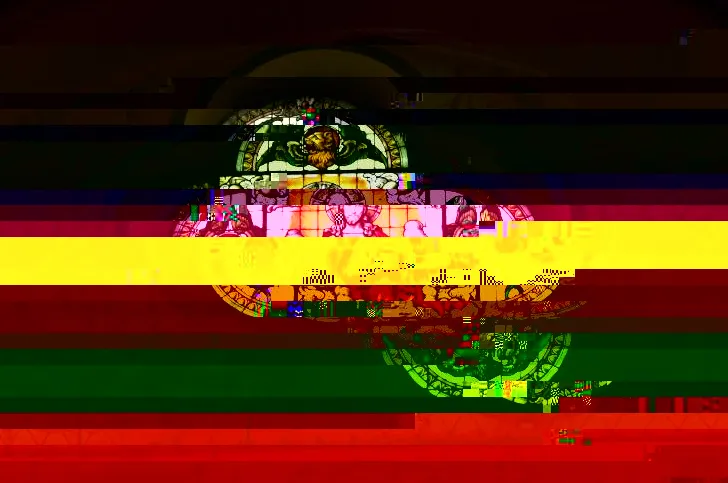
Photo: Lucas Rafael Tenllado Gil, CC BY-SA 4.0, via Wikimedia Commons
There's a luxury streetwear brand right now selling a hoodie for $380. On the chest, rendered in careful, deliberate detail, is what looks like a corrupted image file — pixels displaced, color channels split, the visual equivalent of a hard drive dying mid-read. It looks accidental. It is absolutely not.
This is where we've landed with glitch aesthetics in 2024. The visual grammar of digital failure — scan lines, data corruption, VHS dropout, RGB channel separation — has completed its long migration from underground net art into the glossy world of fashion campaigns, luxury packaging, and Fortune 500 rebrands. The void has been monetized. The signal has been licensed.
Where It Actually Started
Before it was a Photoshop filter or a Nike campaign, glitch art was genuinely weird, genuinely unglamorous work. Artists like Rosa Menkman, who literally wrote the academic framework for understanding glitch as a cultural form, and Takeshi Murata, whose video manipulations felt like transmissions from a melting dimension, weren't making this stuff to be cool. They were interrogating the machine itself — asking what digital systems reveal about themselves when they break.
The early 2000s net art scene treated glitch as a kind of truth-telling. When a JPEG degrades or a video codec collapses, you're seeing the underlying structure of the file exposed. The corruption is the content. It was anti-slick at a moment when the tech industry was selling everyone on the promise of frictionless, perfect digital lives.
Stateside, artists working in experimental video and early internet spaces — many of them operating outside gallery systems entirely, posting work on forums and personal sites that no longer exist — were building this visual vocabulary brick by broken brick. It wasn't a movement with a manifesto. It was more like a shared frequency that certain people could tune into.
The Pipeline From Subculture to Storefront
The absorption didn't happen overnight. You can trace a rough timeline: glitch aesthetics hit indie music video culture hard around 2010 to 2013, showing up in work for artists on the experimental edges of electronic music. Then came the fashion editorials — a Dazed & Confused spread here, a Vogue Italia experiment there. Graphic designers picked it up as a tool for communicating a certain kind of digital-native energy.
By the mid-2010s, the look had reached advertising. Tech companies especially loved it — there's an irony almost too rich to process in a Silicon Valley startup using the visual language of technological failure to sell you their product. But here we are.
The acceleration hit differently once social media algorithms started rewarding visual disruption. On Instagram and TikTok, glitched content stops the scroll. The human eye is wired to notice things that look broken. What was once a philosophical gesture about the nature of digital systems became, in the attention economy, just another hook.
What Gets Lost in Translation
Here's the thing about aesthetics that get absorbed into commercial culture: the form survives but the meaning evaporates. A luxury brand deploying glitch visuals isn't saying anything about the fragility of digital infrastructure or the hidden structures inside our machines. It's saying we are current, we are edgy, we understand the internet.
That's a fundamentally different statement. And it tends to crowd out the original one.
Rosa Menkman has spoken about this tension — the way glitch art gets reduced to a "look" when its actual substance was always about process, about the relationship between error and system. When a design agency recreates the appearance of data corruption using clean, controlled software tools, they've made something that resembles glitch art the way a theme park resembles a real city. The texture is there. The underlying reality isn't.
For the artists who came up in those early net art spaces, watching their visual language get premium-priced is a specific kind of dissonance. Some have made peace with it. Others have moved deliberately further out — into territories that are harder to aestheticize cleanly, harder to sand down into something a brand can use.
The Authenticity Question Nobody Wants to Answer
There's a conversation that keeps circling in design and art communities about whether any of this matters — whether the commercial adoption of subculture aesthetics is just the natural order of things, or whether something genuinely gets destroyed in the process.
Honest answer: probably both.
Cultures absorb and transform things. The history of American visual culture is essentially a long series of underground aesthetics getting mainstreamed, stripped of context, and sold back at markup. Punk. Grunge. Streetwear. The pattern is so consistent it almost feels like a law of nature.
But the speed of it now is different. The pipeline from subculture to brand campaign used to take a decade. Now it can happen in two years, sometimes less. The algorithm doesn't just spread aesthetics — it accelerates their commodification, because the same platforms that surface the work also surface it to the exact people who want to buy and sell it.
The Underground Keeps Moving
What's actually interesting is what happens at the edges after the center gets colonized. The artists and designers who were genuinely invested in glitch as a mode of inquiry haven't stopped working — they've just moved the conversation somewhere less accessible.
There are corners of the internet where people are doing things with data bending, circuit bending, and intentional hardware destruction that don't photograph cleanly for Instagram. The work is messier, more process-oriented, less immediately legible as aesthetic. Which is, maybe, exactly the point.
The void keeps generating signal. It just keeps changing frequencies when the commercial world figures out how to tap in. That $380 hoodie is, in a strange way, proof that the original gesture meant something — you don't sell the copy unless people can feel the ghost of the real thing underneath it.
Whether that's consolation or insult probably depends on where you were standing when the glitch was still just a glitch.