Paying for Nothing: How Tech's Elite Turned Emptiness Into the New Luxury

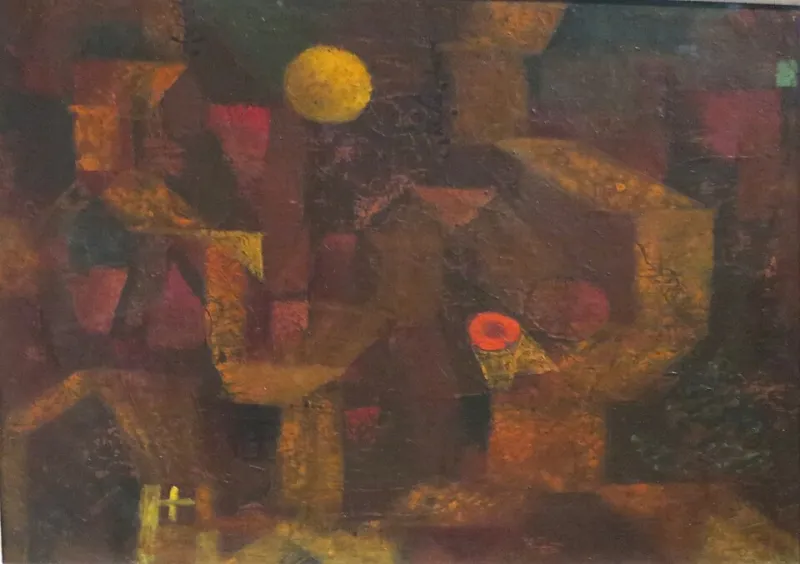
Photo: Dietmar Rabich, CC BY-SA 4.0, via Wikimedia Commons
There's a subscription tier called Void. It costs $40 a month. You get a white screen, a soft hum that isn't quite music, and a push notification at the top of every hour that reads: nothing to report. That's it. That's the product.
And people are paying for it.
This is where we've landed in 2024 — a moment so glutted with content, stimulation, and algorithmic noise that the absence of all of it has become something people will actually open their wallets for. Intentional digital emptiness is no longer a fringe concept floated in tech-detox think pieces. It's a market. A weird, paradoxical, deeply American market.
The Attention Economy Eating Itself
For the last decade, every platform, every app, every notification badge has been optimized to capture more of your time. The logic was simple: attention is the resource, and whoever harvests the most of it wins. Silicon Valley built an entire civilization on that premise.
But somewhere along the way, the people who built that civilization started quietly opting out of it.
You've probably noticed the pattern. The same tech founders who engineered infinite scroll are now doing silent retreats in the desert. The same product managers who A/B tested notification timing are now paying coaches to help them sit in a room with their phone in another room. There's something almost comedic about it — the arsonists hiring themselves out as firefighters.
But the behavior points to something real. Constant stimulation has a ceiling. And for people with enough money and enough awareness to recognize that ceiling, the response isn't to consume less — it's to consume nothing, and to pay a premium for the experience of doing so.
What Null Content Actually Looks Like
The landscape of void-as-product is stranger than you'd expect. On one end, you've got apps like Endel and Calm, which have been selling ambient soundscapes for years — those are practically mainstream at this point. But the newer wave goes further.
Some platforms are selling what developers are literally calling "null content" — interfaces stripped of any media, any feed, any input mechanism beyond the occasional breath prompt. Others are offering "ambient void" subscriptions: a scheduled block of time where the app does nothing except confirm, softly, that it's still there. One app, built by a former Google engineer, sends users a daily email containing a single period. Just a period. No subject line. The waitlist has over eight thousand people on it.
There are void-themed meditation apps that use noise-canceling audio profiles to create what their marketing copy calls "negative sonic space" — not silence exactly, but a shaped absence of sound that feels engineered rather than accidental. The distinction matters to the people buying it. Accidental silence is what happens when your Wi-Fi drops. Intentional silence is a product.
The Class Dimension Nobody Wants to Talk About
Here's the part that gets uncomfortable: this is expensive. And that's kind of the point.
Access to genuine quiet — physical, digital, cognitive — has always tracked with money. The wealthy have always been able to buy distance from noise: bigger houses, private neighborhoods, first-class cabins where nobody bothers you. Digital void is just the latest version of that same transaction.
When a $40-a-month blank screen becomes a status symbol, it signals something specific about who's buying it. It says: I have so much content available to me that I can afford to pay to not see any of it. It says: I understand the attention economy well enough to know I want out. It's conspicuous non-consumption, which is its own kind of conspicuous consumption.
The branding around these products leans hard into this dynamic without ever quite naming it. Words like "intentional," "curated," and "mindful" do a lot of work. The aesthetic is always minimal — lots of white space, sans-serif fonts, interfaces that look like they cost a lot of money to look like they have nothing on them.
The Paradox at the Center of All of This
Selling nothingness requires you to make nothingness into something. That's the core contradiction the void market hasn't figured out how to resolve, and honestly, it might not need to.
The apps still send notifications. The subscriptions still have onboarding flows. There are still customer support tickets and app store reviews and social media accounts posting about how their product helps you escape social media. The void has a funnel. The silence has a marketing strategy.
And yet the experience, for the people inside it, seems to be doing something real. Neurologically, there's solid backing for the idea that structured downtime — even artificially constructed downtime — has measurable effects on stress and cognitive load. The wrapper might be absurd, but what's inside the wrapper might actually work.
Maybe that's enough. Or maybe the fact that you need an app to tell you it's okay to stare at a wall for twenty minutes says something darker about where we've ended up.
What the Void Is Actually Selling
Strip away the aesthetics and the pricing tiers, and what these products are really selling is permission. Permission to stop. Permission to not produce, not consume, not optimize. In a culture that treats rest as laziness and silence as wasted time, someone handing you a blank screen and saying this is the thing now is doing something almost therapeutic.
The fact that it costs money to access that permission is its own commentary on how we got here. We built a world so full of signal that we had to commodify the absence of it. We engineered so much noise that stillness became a luxury good.
Void Signal has always been interested in what happens at the edges of digital experience — where the format breaks down, where the content stops, where the algorithm runs out of things to show you. The void market is that edge, monetized and packaged and sold back to the people who built the thing that made the edge necessary.
It's strange. It's very American. And it's probably not going away.