Ghost Networks: How Gen Z Is Disappearing Inside the Open Internet

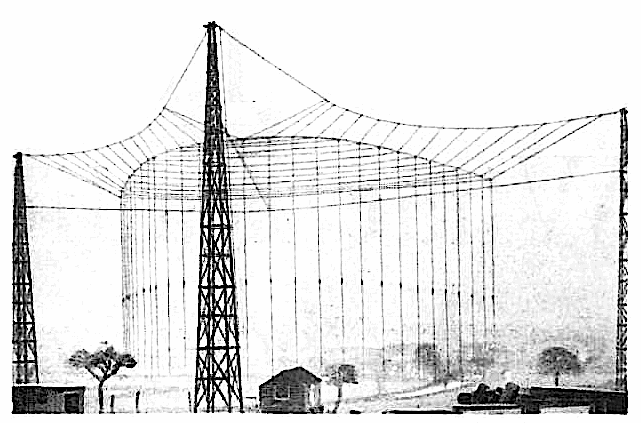
Photo: Paul Klee, Public domain, via Wikimedia Commons
There's a version of the internet you probably can't see. It doesn't have a homepage. It doesn't run ads. Nobody is optimizing engagement on it, and no algorithm is learning your behavioral patterns to sell you sneakers. It exists inside the same physical cables and wireless signals that carry your TikTok feed — but it operates on a completely different set of rules.
Gen Z built it. And they're not exactly advertising the address.
The Problem With Visibility
To understand why a generation raised on social media is now quietly retreating from it, you have to sit with the contradiction for a second. These are people who grew up broadcasting everything — their bedrooms, their opinions, their lunch. Public-facing identity was the whole point. The like count was the scoreboard.
But something shifted. Maybe it was the Cambridge Analytica fallout. Maybe it was watching parents and employers dig through old posts. Maybe it was the creeping realization that every keystroke was being harvested, profiled, and sold to the highest bidder before it even finished loading. Whatever the trigger, a meaningful chunk of younger users started asking a pretty reasonable question: what if visibility itself is the problem?
"I don't hate the internet," says Marcus, a 22-year-old network hobbyist in Portland who asked to use only his first name. "I hate what it became. It's like every public square got turned into a mall with cameras everywhere. So we built our own back rooms."
Those back rooms are real, technically speaking. They're running on tools like Matrix, a decentralized open-source messaging protocol that lets users host their own servers. Or Yggdrasil, a mesh networking project that routes communication peer-to-peer without touching centralized infrastructure. Or even older, stranger technology — repurposed Usenet groups, private IRC channels, Tor-based forums that require a personal referral to enter.
Invitation Only, Always
The gatekeeping is intentional and philosophical, not elitist. Communities built on these platforms tend to have strict no-recruitment policies. You don't find them through a search engine. You get in because someone who trusts you hands you the keys — sometimes literally a cryptographic key — and vouches for you to the existing members.
This isn't paranoia cosplay. It's a deliberate architectural choice that mirrors how human trust actually works offline. Before the social media era, most people's social circles were naturally bounded. You knew your neighbors, your coworkers, maybe a few hundred people across your whole life. The intimacy of those relationships had something to do with their scarcity.
Sydney, a 24-year-old designer in Austin who participates in a private Matrix community focused on experimental art and music, describes it as "the difference between a dinner party and a stadium concert. Both are technically social events. But one of them actually feels like connection."
The communities themselves are varied. Some are explicitly political, organized around digital rights and anti-surveillance activism. Others are creative collectives sharing work that never makes it to Instagram. Some are just friend groups who got tired of texting on platforms that read their messages to train AI models. The common thread is intentionality — every participant chose to be there through a chain of real-world trust.
Minimalism as Resistance
The tools these communities favor tend to share a certain aesthetic sensibility: plain text, low bandwidth, no bloat. Matrix rooms look like IRC channels from 1997. Gemini, an alternative internet protocol gaining quiet traction in these circles, serves pages in pure text with no images, no JavaScript, no tracking pixels. Browsing it feels like reading a zine.
That minimalism isn't accidental. It's a statement. Every unnecessary feature on a mainstream platform is another surface for data collection, another opportunity for an algorithm to intervene between you and the thing you actually came to do. Strip the interface down to its bones and you strip out most of the machinery of surveillance capitalism along with it.
"There's a clarity to it," says Marcus. "When there's no feed to scroll, you have to actually know what you came for. It forces intentionality. You can't just drift."
Digital minimalism as a concept has been floating around wellness circles for years, usually framed as a personal productivity hack — delete the apps, reclaim your focus. But what's happening in these ghost networks feels less like self-help and more like infrastructure building. It's not about using the internet less. It's about using a different internet entirely.
The Philosophical Undercurrent
Talk to enough people in these communities and a coherent worldview starts to emerge. It's not quite anarchism, not quite libertarianism. It borrows from cypherpunk ideology — the 1990s movement that believed encryption was a political act — but it's filtered through a generation that grew up watching the utopian promises of Web 2.0 curdle into something extractive and exhausting.
The core belief is something like: attention is a resource, privacy is a prerequisite for authentic thought, and any platform with an advertising model has a structural incentive to compromise both. Given that framing, opting out of mainstream platforms isn't antisocial. It's self-defense.
Not everyone in these spaces is technically sophisticated. Some participants are just regular people who got handed a Matrix invite by a friend and found they liked the vibe. The tools have gotten accessible enough that you don't need to understand cryptography to benefit from it — the same way you don't need to understand how TCP/IP works to browse the web.
What Disappearing Actually Looks Like
It's worth being clear: most of these users haven't fully vanished from mainstream platforms. They still have Instagram accounts. Some of them are active on Reddit. The ghost network isn't a replacement for public life — it's a supplement to it. A quieter room inside a louder building.
But the direction of travel matters. The energy and the authenticity are migrating inward. The stuff that actually matters — the real conversations, the unfinished creative work, the political organizing, the genuine community — is increasingly happening in spaces that don't index, don't monetize, and don't perform.
The public internet is still there, still loud, still full of content. But for a growing number of younger users, it's becoming more like a lobby than a home. A place you pass through on your way to somewhere the cameras can't follow.
The signal is still transmitting. You just need the right frequency to hear it.