Dead Air, Live Signal: The Pirate Broadcasters Reclaiming the Airwaves in 2024
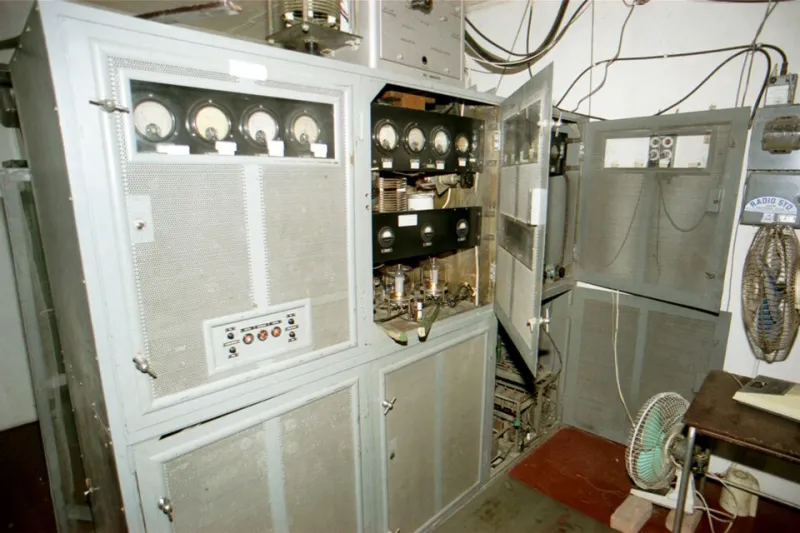
Photo: Henryk Kotowski (Kotoviski), CC BY 2.5, via Wikimedia Commons
Somewhere in South Chicago, a transmitter about the size of a paperback novel is sitting on a fire escape, pointed at a neighborhood. It's broadcasting on 97.3 FM — a frequency that's technically licensed to a station in another city that hasn't used it locally in years. The signal reaches maybe a six-block radius. In that radius, you can hear a DJ playing records, taking calls on a landline, reading community announcements between tracks. No ads. No algorithm. No terms of service.
This is pirate radio in 2024. It's smaller than you think, more technical than it used to be, and more politically charged than it's been in a long time.
The Frequency Gap Nobody's Filling
The FM dial in most American cities looks crowded on paper but sounds hollow in practice. Consolidation in the radio industry over the past two decades has left huge swaths of the country served by a shrinking number of corporate owners playing the same nationally syndicated content across dozens of stations. The FCC licenses exist. The physical infrastructure exists. What's missing is anything local.
That gap is where pirate broadcasters operate. Not in the dramatic, high-wattage outlaw style of the 1990s — when stations like WTRA in Springfield, Illinois were blasting signals across entire metro areas before getting raided — but in something quieter and more deliberate. Modern unlicensed microbroadcasters are low-power by design, intentionally staying under the threshold where interference becomes a practical concern and enforcement becomes likely.
The FCC does pursue pirate radio cases, particularly in markets like New York and Miami where the dial is genuinely congested. But in mid-sized cities and rural areas, the agency's resources are spread thin. A 1-watt transmitter on an unused frequency in a rust belt neighborhood is a low priority. Operators know this, and they plan around it.
SDR Changed Everything
The technological shift that's driving this resurgence isn't dramatic, but it's significant. Software-defined radio — SDR — has collapsed the cost of entry for anyone who wants to work with radio frequencies. A device that would have cost thousands of dollars in specialized hardware twenty years ago now runs on a $30 USB dongle and open-source software you can download in an afternoon.
SDR lets you receive, analyze, and transmit across a wide range of frequencies using a laptop and a cheap antenna. For pirate broadcasters, this means the barrier to getting on air is basically zero. You don't need to know how to solder. You don't need a background in electrical engineering. You need a computer, a dongle, a transmitter module, and the willingness to read some documentation.
Communities on Discord and Reddit dedicated to SDR have become informal training grounds for new operators. Tutorials circulate on how to find unused frequencies in your area, how to calculate your effective broadcast radius, how to minimize interference with licensed stations. The knowledge is out there, freely available, and the people sharing it are meticulous about operating responsibly — not out of deference to the FCC, but because they don't want to blow up their own operation by creating problems that attract attention.
Who's Actually Broadcasting
The population of pirate radio operators in 2024 is more diverse than the stereotype suggests. Yes, there are music-focused stations — DJs, record collectors, experimental artists who want to put sound into physical space rather than onto a streaming platform. But there's also a lot more going on.
In several Southern cities, community organizers are using low-power FM to distribute information in neighborhoods where internet access is unreliable and local news has evaporated. In the Southwest, there are stations broadcasting in Indigenous languages, preserving and transmitting linguistic content that has no commercial home. In college towns, student operators are running stations that function as both broadcasting experiments and community radio in the old-school sense — call-in shows, local music, neighborhood news.
What connects all of them is a resistance to the platform model. Every streaming service, every podcast host, every social media channel comes with a set of conditions: terms of service, content moderation policies, algorithmic distribution, the constant possibility of deplatforming. Radio — even illegal radio — doesn't work that way. If you're in the signal's range and you've got a receiver, you get the broadcast. Nobody can put it behind a paywall. Nobody can demonetize it. Nobody can shadowban it.
That's not a small thing in 2024.
The Analog-Digital Hybrid
One of the more interesting things happening in this space is the way pirate broadcasters are combining analog transmission with digital community infrastructure. A station might broadcast over FM but coordinate its programming through a private Discord server. Listeners who find the frequency might get directed to an encrypted chat where they can interact with operators and other listeners. The broadcast is the public face; the digital layer is where the community actually lives.
This hybrid approach solves a real problem: FM radio is one-directional and anonymous, which is great for security but limits how much community you can build around it. By layering a private digital community on top of the public broadcast, operators get the uncensorable signal reach of radio plus the interactivity of a group chat. It's a genuinely novel communication structure, and it's being built by people who are mostly just figuring it out as they go.
The Resistance Dimension
It would be easy to romanticize this. Plucky outlaws reclaiming the airwaves, sticking it to Clear Channel, keeping the spirit of community radio alive. That narrative isn't wrong, exactly, but it flattens something more complicated.
Pirate radio has always operated in a legal gray zone that falls harder on some communities than others. The FCC's enforcement history shows a consistent pattern of more aggressive action in urban areas with large Black and Latino populations — particularly in New York and South Florida, where Caribbean and Latin American community stations have been repeatedly targeted. The freedom to broadcast without consequences isn't evenly distributed.
The new generation of operators seems aware of this history. There's more attention to security culture, to operating in ways that minimize exposure, to understanding who bears the most risk. That's a maturity that the scene didn't always have.
What It Sounds Like
Back on that Chicago fire escape, the transmitter is still running. The DJ has switched from soul records to something more electronic — slow, textural, not quite ambient but not quite danceable either. Between tracks, they read out a phone number for a local mutual aid network. A few blocks away, someone in a car hears it and writes the number down.
That's the signal. That's what all the hardware and the legal risk and the technical knowledge is in service of: a voice in the air, reaching people in physical space, carrying something that matters to the community it's built for.
The platforms can't replicate that. The algorithm doesn't know what to do with it. And that, right now, is exactly the point.