Dead Seconds: The Hidden Market Feeding on Your Unfocused Mind
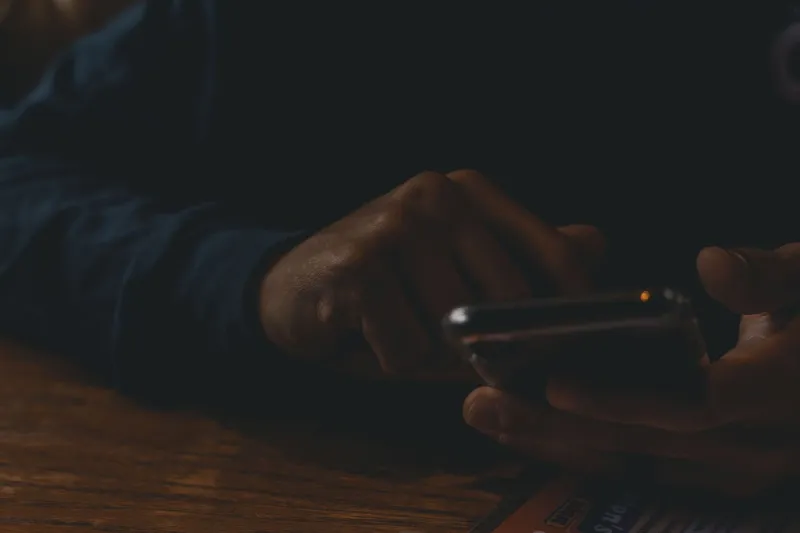
There's a moment — you know the one. The app is loading. Your thumb is hovering. Your brain is doing that soft, idle hum it does when it's not quite thinking about anything. You're not bored exactly. You're just... between.
That gap? Somebody owns it.
The Inventory Nobody Told You About
The attention economy has been talked to death at this point. Everybody knows the deal: your eyeballs are the product, engagement is the currency, blah blah blah. But the conversation usually centers on the content — the video you watched, the post you lingered on, the ad you clicked. What rarely gets discussed is the space around all of that. The negative space. The loading screen. The three seconds between closing one app and opening another. The mindless scroll that happens at 11:43 PM when you're not looking for anything in particular.
This is dead time. And it's anything but dead to the platforms that have learned to read it.
Researchers in behavioral data science have been quietly building models around what they call "liminal engagement" — the micro-states of attention that exist in the transitions between intentional actions. When you're actively watching something, your guard is partly up. You made a choice. But in the gaps? Your brain is in a kind of open-door mode. Receptive. Unguarded. Malleable.
AI systems trained on billions of user sessions have gotten remarkably good at identifying exactly when you've entered that state. And once they know, the next move is almost automatic.
What Boredom Looks Like to a Machine
To a behavioral algorithm, boredom has a signature. Scroll velocity changes. Tap frequency drops. Session pauses stretch longer. The pattern of your interaction with a screen shifts in ways that are measurable down to the millisecond. You don't have to tell the app you're zoning out. It already knows.
This is where it gets interesting — and uncomfortable. Because that signature isn't just being logged for posterity. It's being used in real time to make decisions about what you see next.
Platforms have long used engagement data to serve content, but the newer generation of recommendation systems operates on something more granular: vulnerability windows. The moment your attention goes soft is the moment the algorithm reaches for its highest-value payload. Not the content you'd consciously choose. The content engineered to hook a drifting mind.
Think about the last time you opened Instagram or TikTok "just for a second" and came up an hour later with no clear memory of what you'd even looked at. That's not an accident of human psychology alone. That's a system that identified your unfocused state and optimized accordingly.
Selling the Pause
Here's where the money actually lives. Advertisers have always paid premiums for "high-attention" placements — the first slot in a YouTube pre-roll, the top of a news feed. But a quieter market has emerged around what ad-tech insiders sometimes call "soft-state targeting."
The pitch to brands goes something like this: users in low-attention, transitional moments are actually more susceptible to certain types of brand imprinting. They're not going to click, necessarily. But they'll absorb. The message lands below the threshold of active resistance. You don't evaluate it. You just receive it.
This is why loading screens have become increasingly sophisticated. Why the "suggested for you" rail appears exactly when you've finished something and haven't decided what's next. Why certain notifications are timed not to when something happened, but to when you're most likely to be drifting.
The dead second is a delivery window. And it's being auctioned off.
The Data Nobody's Asking About
Most privacy conversations focus on what data is collected: location, browsing history, purchase behavior. The creepier and less-discussed frontier is behavioral state data — inferences about your cognitive and emotional condition at any given moment.
You can't see this data. It's not in your settings. It doesn't show up in those "download your data" exports that make people feel like they're in control. It exists as a layer of inference built on top of your raw behavioral signals, and it's being used to profile not just who you are, but when you're most open to influence.
Some of this is being traded. Data brokers have expanded their product catalogs beyond demographics and purchase intent into what you might call attention-state profiles — aggregated, anonymized (in theory) models of when certain user segments are most cognitively disengaged. Buy that data, and you can target the drift.
The Void Has a Price Tag
There's something almost philosophically unsettling about this. The moments we think of as meaningless — the idle thumb, the glazed scroll, the half-conscious wait — are actually the most aggressively monetized real estate in digital life. Precisely because we're not paying attention, someone else is paying for it.
The experimental edge of digital culture has always been interested in the spaces between signals. Glitch artists work in the breakdown. Ambient musicians fill the negative space. There's a whole aesthetic tradition built on the idea that what happens in the gaps is where the real transmission occurs.
The attention economy figured that out and ran with it — just not in the direction anyone would've hoped.
What You Can Actually Do
This isn't a piece that ends with "delete your apps" because that's both obvious and useless advice for most people. But there are a few things worth sitting with.
First: the apps that feel most "frictionless" are often the ones most aggressively designed around your inattentive moments. Friction, weirdly, can be a form of protection. An app that makes you make a choice is an app that keeps you in an active cognitive state.
Second: the notification you get that seems perfectly timed — the one that hits right when you're already picking up your phone for no reason — is probably not a coincidence. These systems are predictive. They're learning your drift schedule.
Third, and maybe most importantly: boredom is not a problem to be solved by your phone. The discomfort of an unfocused mind is actually your mind doing something — processing, wandering, making connections. The platforms that rush to fill that space aren't doing you a favor. They're filling a gap that was never really empty.
Your dead seconds aren't dead. They're yours. Someone just forgot to tell you they were taking them.