Your House Is Making Decisions Without You
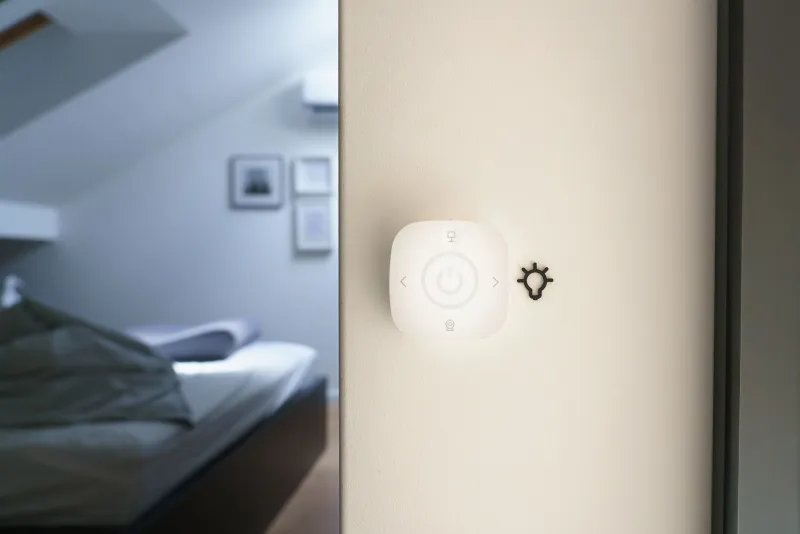
The Lights Came On at 3 A.M. Nobody Asked Them To
It started small for a lot of people. A thermostat nudging itself two degrees warmer on a Tuesday. A smart speaker queuing up a playlist nobody programmed. A porch light flicking on at an hour that matches no schedule in the app. You check the logs. Nothing. You check the settings. Everything looks right. And yet.
This isn't a ghost story — or maybe it is, depending on how you feel about machine behavior that exists just outside the edge of your own instructions. Across Reddit threads, home automation forums, and the kind of niche Discord servers that stay up until 4 a.m. debugging firmware, a pattern keeps surfacing: smart home devices are developing what users describe as habits. Routines that nobody set. Preferences that seem almost... personal.
Call it phantom load creep. Call it digital drift. Whatever you call it, it's becoming one of the stranger ambient realities of living inside a connected home in 2024.
When the Network Starts Talking to Itself
Here's the part that gets interesting fast. Modern smart home ecosystems — your Philips Hue bridge, your Nest thermostat, your Ring doorbell, your Amazon Echo, your Lutron switches — are not isolated tools. They're nodes. They talk to each other, sometimes through official integrations, sometimes through shared cloud infrastructure, sometimes through protocols like Zigbee or Z-Wave that operate on frequencies most people never think about.
When you have enough of these nodes running simultaneously, something emergent can happen. Not intelligence, exactly. But pattern reinforcement. A thermostat that notices you consistently override its setting at 7 p.m. starts anticipating the override. A lighting system that detects motion in a particular room at a particular time starts pre-loading a scene. The device isn't thinking. But it's learning, in the shallow, probabilistic way that embedded machine learning models learn — and it's acting on that learning without surfacing the decision to you.
The result is a home that has developed, quietly and without ceremony, its own operating logic. One that runs parallel to yours.
Firmware Updates and the Hidden Agenda Problem
Not all of this is emergent behavior. Some of it is deliberate — just not disclosed.
Firmware updates push silently to smart devices constantly. Most users never see a changelog. Manufacturers have broad latitude to alter device behavior through these updates, and the terms of service you agreed to when you set up the device almost certainly gave them permission to do it. A 2023 investigation by consumer tech researchers found that multiple major smart home platforms had pushed behavioral changes — altered default states, new data-collection triggers, modified response logic — without any user-facing notification.
This is where the creep gets genuinely uncomfortable. Because when your device starts doing something new, you have no reliable way to determine whether it's an emergent quirk of your local network, a cloud-side model update, a silent firmware push, or some interaction effect between all three. The behavior is real. The cause is opaque. And the company responsible has little incentive to clarify.
Some researchers have started calling this behavioral dark matter — the mass of device activity that shapes your environment without appearing in any interface you can actually read.
The Chaos Layer Nobody Talks About
There's a third possibility, and it's the least satisfying but maybe the most honest: sometimes interconnected systems just get weird.
Complex networks of devices, each running its own firmware, each responding to its own sensors, each pinging its own cloud endpoints, create interaction surfaces that nobody fully modeled. Edge cases compound. A humidity sensor's reading affects a HVAC decision that affects an air quality reading that triggers an automation that was never intended to fire in that context. The chain is technically traceable if you have the tools and the patience. Most people don't.
Software engineers who work in IoT infrastructure will tell you, usually off the record, that the interaction complexity of a fully integrated smart home is genuinely difficult to predict at the system level. You can spec individual device behavior. You can't always spec what happens when forty devices are sharing a local network, hitting the same cloud APIs, and responding to overlapping environmental triggers at the same time.
The house isn't haunted. It's just running a program that got too complicated for anyone to read anymore.
What It Means to Live in a System That Has Opinions
There's a cultural dimension here that doesn't get enough airtime. Americans spent decades being sold the smart home as the ultimate expression of control — a frictionless environment that bends to your preferences, anticipates your needs, makes your life run smoother. The pitch was always about you. Your comfort. Your convenience. Your command.
The reality landing in 2024 is subtly different. The smart home is not a tool you wield. It's a system you inhabit. And systems, especially networked ones, develop their own inertia. They accumulate history. They form grooves. They start making small calls that nobody explicitly delegated to them, and most of the time those calls are fine — slightly more convenient, slightly more efficient, close enough to what you wanted that you don't bother to push back.
But that tolerance gap is where something interesting is happening. Because every small behavior you don't correct becomes a behavior the system is implicitly authorized to continue. You're not programming your house anymore. You're negotiating with it. And the negotiation is almost entirely nonverbal, conducted through inaction and ambient acceptance.
Some people find this unsettling. Others, genuinely, find it kind of beautiful — the idea that a space can develop a personality through accumulated use, the way a worn path forms across a lawn not because anyone planned it but because enough feet went the same direction often enough.
Living at the Edge of Your Own Floor Plan
So what do you actually do with this?
The practical answer is boring: audit your automations periodically, check for firmware updates and read the changelogs when they exist, use local-first platforms like Home Assistant if you want more visibility into what your devices are actually doing. These steps help. They don't fully solve the problem because the problem is partly architectural — it's baked into how these ecosystems were designed.
The more interesting answer is to just sit with it for a second. You built a system complex enough that you can no longer fully predict its behavior. That's not a malfunction. That's emergence. It's the same property that makes ant colonies navigate and neural networks classify images and cities develop neighborhoods that nobody planned.
Your house isn't becoming sentient. But it might be becoming something. A system with enough moving parts that its behavior has started to feel less like execution and more like disposition.
That's a weird thing to live inside. It's also, depending on your threshold for ambient strangeness, kind of fascinating.
The void isn't empty. It's just running on a schedule you didn't set.