Beautiful Corruption: How Broken Pixels Became a Canvas
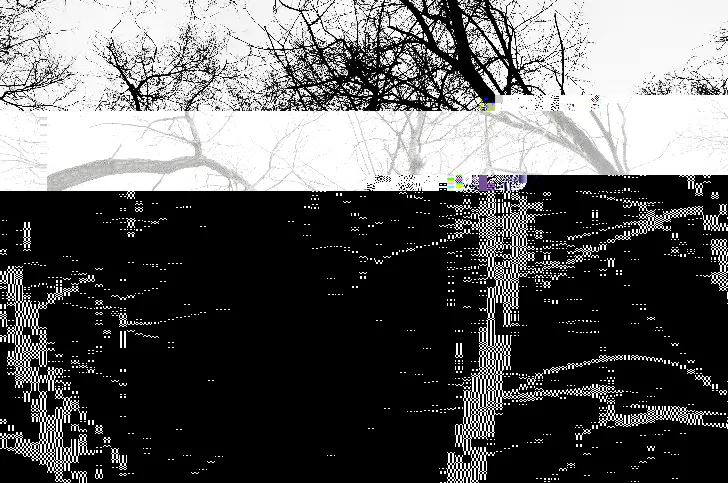
Photo: Lucas Rafael Tenllado Gil, CC BY-SA 4.0, via Wikimedia Commons
There's something deeply satisfying about watching a system fall apart in exactly the right way. A JPEG compressed too many times. A VHS tape dragged across a magnet. A file header manually rewritten in a text editor until the image it contained starts doing things images aren't supposed to do. That satisfaction — that weird pull toward controlled chaos — is at the core of glitch art, and it's been quietly rewiring how we think about aesthetics in the digital age.
This isn't a fringe thing anymore. Glitch aesthetics are embedded in mainstream visual culture whether people realize it or not. That distorted transition in a music video. The pixelated corruption effect in a brand's Instagram Reels. The fragmented typography on a streetwear drop page. All of it traces back to a philosophical position that took decades to articulate: that the error isn't a problem to fix. It's a message worth reading.
From Accident to Intention
Glitch art didn't start in a gallery. It started in frustration — artists and early digital experimenters noticing that broken technology produced visuals that felt more honest, more raw, than anything they could manufacture deliberately. In the 1980s and '90s, video artists like Nam June Paik were already manipulating television signals and corrupting analog feeds in ways that felt transgressive. The screen was supposed to show you something clean and controlled. Breaking it meant breaking the contract.
When personal computing became widespread, a new generation of practitioners started treating software as material. Not the output of software — the software itself. Artists began "databending," a technique where non-image files are opened in image editors, or image files are opened in audio software, creating unpredictable transformations. The data doesn't know what it's supposed to be. So it becomes something else entirely.
Rosa Menkman, a Dutch theorist and artist who's one of the most cited voices in glitch studies, framed it this way: glitch art is about exposing the "rift" between the perfect surface technology promises and the messy reality underneath. It's not nihilism. It's archaeology. You're digging through the polished exterior to find what's actually holding everything together — or what isn't.
The Philosophy Behind the Fracture
There's a reason glitch art resonates so deeply with people who grew up online. Digital life is sold to us as seamless. Platforms optimize for frictionless experience. Everything is supposed to load instantly, render perfectly, feel smooth. Glitch art is a deliberate refusal of that promise.
In that sense, it's politically charged even when it doesn't look it. An artist who corrupts a stock photo of a smiling family isn't just making something that looks cool — they're asking what's hiding behind the image. What assumptions are baked into the file? What gets lost in compression? These questions sound abstract until you realize they apply to everything from news photography to social media selfies.
For younger practitioners especially, glitch aesthetics carry a kind of authenticity that hyper-polished content can't replicate. Imperfection signals realness. Corruption signals that someone actually touched this, that it passed through a process, that it has a history.
TikTok, Instagram, and the Democratization of the Broken
What's genuinely wild about the current moment is how accessible glitch art has become. A decade ago, databending required at least a basic understanding of file structures and a willingness to manually hex-edit images. Now there are apps. There are TikTok filters. There are Premiere Pro presets that simulate VHS corruption with a single click.
On one hand, that's a huge shift toward accessibility — more people making more experimental work, more audiences developing a visual vocabulary for glitch aesthetics. On the other hand, practitioners who've been in this space for years are quick to point out the difference between using a glitch filter and understanding what a glitch actually is.
"The filter gives you the look," one Brooklyn-based digital artist who goes by the handle @voidframe_ explained in a recent thread that circulated widely in experimental art circles. "But the look without the process is just cosplay. Real glitch work is about the conversation between you and the system. You're not in control. Neither is the machine. Something happens in that middle space."
That middle space is where the interesting stuff lives. And even if the mainstream version is a filtered approximation, it's pulling new people toward the real thing. Plenty of artists working seriously in glitch today found their way in through a TikTok effect or a Photoshop tutorial. The gateway matters, even if it's not the destination.
Platforms as Unintentional Collaborators
Here's where it gets really interesting: the platforms themselves are glitch generators. Every time Instagram recompresses your image, every time YouTube's encoder introduces artifacts into a video, every time Twitter's image cropping algorithm makes a strange decision — that's a form of data corruption. Artists have started treating platform compression as a medium.
Some creators deliberately upload images through multiple platforms in sequence, letting each one degrade the file a little further, then download and repeat. The result is an image that carries the fingerprints of every system it passed through. It's collaborative, in a way — you and the algorithm, neither of you fully in charge.
This has opened up genuinely new territory in net art, a practice that's been around since the early web but is finding new energy as people recognize that the internet's infrastructure isn't neutral. It has textures. It has biases. It compresses some things more than others. Glitch artists are the ones paying attention to that.
What Comes Next
AI image generation has introduced a new dimension to all of this. Generative models hallucinate. They produce hands with too many fingers, backgrounds that dissolve into nonsense, text that almost looks like words but isn't. For a lot of people, that's a bug. For glitch artists, it's a feature — or at least a starting point.
Some practitioners are deliberately prompting AI systems in ways designed to produce failures, then working with those failures as raw material. It's the same philosophical move as databending, just with a different kind of system. The error is still the message. The corruption is still the canvas.
Glitch art isn't going anywhere. If anything, it's becoming more relevant as our digital environments become more complex, more opaque, and more aggressively optimized. Every system that tries to hide its seams is an invitation. The artists who work in this space are just the ones who learned to pull at the threads.