Dead Infrastructure Walking: The Ghost Systems Keeping the Internet Alive
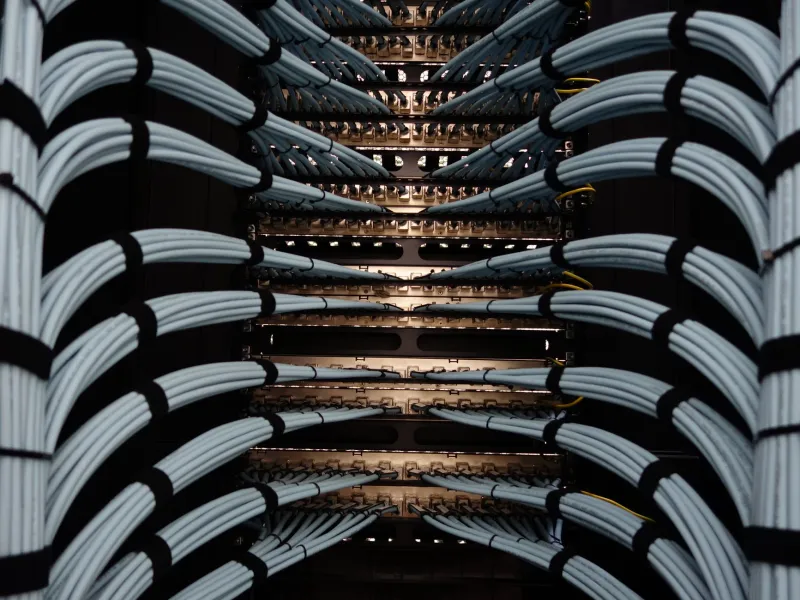
Somewhere in a temperature-controlled room in suburban Virginia, a server rack is doing its job. Nobody is watching it. Nobody has touched it in years. The company that installed it got acquired, then restructured, then absorbed again into something unrecognizable. But the rack hums. The packets route. The signal moves.
This is the actual internet — not the glossy product page version, not the fiber-optic future promised in telecom commercials, but the layered, sedimentary thing that accumulated over forty years of corporate decisions, infrastructure builds, and graceful abandonments. It's invisible by design. And it's stranger than most people ever think to ask about.
The Archaeology of Connectivity
When engineers talk about internet infrastructure, they use the word redundancy like it's a virtue. And technically, it is. The network was built to survive — originally conceived with Cold War logic, where any single point of failure could cascade into total collapse. So redundancy got baked in at every level. Duplicate pathways. Fallback nodes. Contingency routes that exist purely to exist.
The side effect of all that survivability is a kind of digital sediment. Old infrastructure doesn't always get decommissioned cleanly. Fiber cables get laid and forgotten under city streets. Bandwidth gets allocated on paper, never fully utilized, and quietly orphaned when contracts expire. Entire network segments persist in operational limbo — technically live, practically invisible, routing traffic for systems that themselves are barely monitored.
Researchers who map internet topology — a niche discipline that sits somewhere between network engineering and digital archaeology — have documented thousands of what they call phantom routes: pathways that appear in routing tables but trace back to infrastructure with no clear current owner. Not hacked, not compromised. Just... adrift.
Who Actually Owns the Backbone
Here's where it gets genuinely weird. Most people assume the internet's physical infrastructure is owned by a handful of giant telecoms — AT&T, Verizon, Comcast, the usual suspects. And those companies do own a lot of it. But the actual ownership map is a patchwork that defies clean categorization.
There are thousands of independent internet exchanges across the US — physical locations where different networks interconnect and hand off traffic. Many of these were built by regional ISPs that no longer exist, or by municipalities that ran out of budget to maintain them, or by universities that quietly let their agreements lapse. The infrastructure stayed. The institutional memory walked out the door.
Add to that the submarine cable systems, the microwave relay towers, the legacy DSL infrastructure still threading through rural America — and you get a picture of connectivity that's less a designed system and more an accretion of decisions made by people who are mostly retired or dead.
Some of this dead weight actually carries live traffic. Packets take the path of least resistance, and sometimes that path runs through a server room nobody's checked on since the Obama administration.
The Scavengers at the Edge
A loose network of independent technologists has started paying attention to all of this — and doing something about it.
They go by different names in different corners of the internet. Hobbyist network operators. Autonomous system tinkerers. The kind of people who apply for their own ASN (Autonomous System Number) through ARIN just to see what they can build with it. They're not hackers in the criminal sense. They're closer to urban explorers, except their terrain is logical rather than physical.
What they've discovered is that the margins of the internet — the underutilized bandwidth, the forgotten peering agreements, the BGP routes nobody's auditing — represent a kind of genuine frontier. Capacity that exists but isn't being used. Infrastructure that can be repurposed without displacing anyone, because nobody was using it in the first place.
Some of these operators are building small-scale alternatives to mainstream platforms: self-hosted forums, decentralized file archives, experimental communication networks that run on protocols most people have never heard of. Not because they're paranoid, exactly. More because the experience of building something on infrastructure that sits outside the commercial internet feels fundamentally different. The latency is weird. The routes are unexpected. The thing you built doesn't behave quite the way it would on AWS.
That weirdness is the point.
Bandwidth as Raw Material
There's a useful analogy here to the early days of lo-fi music. When four-track cassette recording became accessible in the 1980s, a generation of musicians didn't try to replicate the sound of a professional studio — they leaned into the hiss, the bleed, the artifacts of cheap equipment. The constraint became the aesthetic. The limitation became the signature.
Something similar is happening at the infrastructure level. Independent network operators aren't trying to build a better AWS. They're working with what's available — legacy hardware, orphaned bandwidth, protocols that feel ancient because they kind of are — and finding that the texture of that material produces something genuinely distinct.
A community radio stream running through a forgotten IX in the Midwest doesn't sound different from one hosted on a cloud platform. But it exists differently. It has a different relationship to failure, to maintenance, to the question of who keeps the lights on. That relationship is invisible to most listeners. To the people building it, it's everything.
The Invisibility Is the Feature
Mainstream platforms spend enormous resources making infrastructure disappear. The whole UX philosophy of consumer tech is predicated on the idea that you shouldn't have to think about how any of this works. The pipe is invisible. The server is invisible. The seventeen layers of abstraction between your thumb and the content it's touching are invisible.
That invisibility is a product decision, not a technical necessity. And it carries costs that don't show up on any dashboard.
When infrastructure is invisible, accountability for it gets murky. When bandwidth is treated as a commodity abstraction, the physical reality of who owns it, where it runs, and what it costs to maintain gets obscured. The ghost systems that power so much of the actual internet persist partly because nobody in a position to decommission them has a clear incentive to do so — and partly because doing so might break something downstream that nobody's mapped yet.
The independent technologists working in these margins aren't solving that problem at scale. They're not trying to. What they're doing is making the infrastructure legible again — at least to themselves, at least in the small territories they've claimed.
There's something almost defiant about it. Building on the forgotten bones of someone else's abandoned project. Routing signal through pathways that were never meant to persist this long. Finding that the void, if you know how to tune into it, is still transmitting.
The frequency is weird. The signal is real.